Book Review of the Killing of Flower Moon
 Killers of the Flower Moon:
The Osage Murders and the Nativity of the FBI
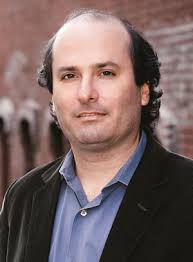
By David Grann
326 pages, Doubleday, $28.95
"They're scalping our souls out here."
Every bit i white Oklahoma businessman put it, "The Osage Indians are condign so rich that something volition take to be done about it."
Journalist and writer David Grann'southward bestselling nonfiction book, "Killers of the Bloom Moon: The Osage Murders and the Nascency of the FBI" tells the stranger (and darker) than fiction story of what was done to the Osage in the wake of their sudden oil wealth, in the 1920's. Long story brusk, they were, in many cases, married or befriended for information technology, then, instantly or over time, in fourth dimension-honored style or creatively, murdered. No one can say definitively how many were murdered, simply the number was certainly in the scores, if not the hundreds. The FBI, or, as it was originally called, just Bureau of Investigation, came to investigate these murders because, it seemed, every unmarried local and country official was either in on the plots, receiving payments to go on quiet about them, or couldn't be bothered to expend energy on the death of an Indian.
Grann zeroes in 1 particular white murderer and his Osage victims, just the killing spree involved many others, featured some common methods, and was dependent on a system of corruption. In a characteristic case, "…the perpetrators of the crime would get an Indian intoxicated, have a doctor examine him and pronounce him intoxicated, following which a morphine hypodermic would be injected into the Indian….The physician's certificate would later on read 'death from alcoholic poison.' " Then helpful undertakers would quietly bury the bodies.
Amid other causes of death commonly listed was wasting disease, consumption or "causes unknown." Between 1907 and 1923, the Osage death rate was more than one and a half times higher than the decease charge per unit for whites, when, with their college standard of living, should past all rights take been lower.
The ancestral lands of the Osage were in present-day Kansas, from which they were driven, in the 1870's, onto the presumably useless, rocky state due south. When oil was discovered, prospectors had to pay drilling leases and royalties to the Osage, whose capital was Pawhuska. In 1923 alone, tribe members collectively earned $30,000,000 in payments. At one point the Osage were, per capita, considered the richest people on earth. But full-blooded Osage were too assigned a white "guardian" who was supposed to look afterwards his or her interests. Then the phase was set for unscrupulous and, in some cases, truly evil, whites to scheme for access to an Osage "headright," their oil inheritance.
The Osage victim with whom Grann initiates us, and whose family we follow nearly closely, is Anna Brown, divorced from her white husband. The book follows the course of the investigation into her expiry, and the subsequent deaths of many of her relatives and acquaintances. The bodies continue piling upwards in numbers and by methods that extend beyond a fictionist'south imaginative reach. Every time the agents who were eventually assigned the Osage cases would get close to witnesses or other with firsthand cognition, "information technology would turn out he'd died alone in a car crash, or drunk bad alcohol, or been bludgeoned to death, or been shot by a storeowner in a setup robbery."
Anna's sis Mollie, the family matriarch, was married to another white human, Ernest Burkhart, and sister Rita was married to some other, Bob Smith. Burkhart's uncle was Bill Hale, self-made cowboy turned business concern leader/ self-proclaimed lawman and "King of the Osage Hills." When Anna went missing ane night, it was Mollie who tried to find her. In July 1921 the inquiry into Anna'southward death was closed for lack of evidence. Her trunk had been institute in a ravine, but no one could turn up the bullet that killed her. In less than three years, Anna's cousin Henry Roan, her sis Rita, Rita'southward husband and a servant would also exist dead. By 1925 at least 60 Osage had died mysterious or unnatural deaths, and their fortunes had passed into the hands of their white "guardians."
An Oklahoma reporter observed in that era, "Travel in any direction that you volition from Pawhuska and yous volition detect at night Osage Indian homes outlined with electrical lights, which a stranger in the land might conclude to be an ostentatious display of oil wealth. But the lights are burned, every bit every Osage knows, as protection against the stealthy approach of a grim specter — an unseen hand — that has laid a bane upon the Osage country and converted the broad acres, which other Indian tribes enviously regard as a demi-paradise, into a Golgotha and field of expressionless men'due south skulls….The perennial question in the Osage land is, 'who will be adjacent?' "
Grann is nix if not an exhaustive researcher, and he introduces a huge cast of characters I had no chance of keeping straight. He too indulges tangents on various coincident subjects: for instance, the history of private eyes, the boarding schoolhouse educations of immature Native Americans, and the country of forensic pathology in the early 20thursday century. At times this explication slows down the otherwise brisk narrative, only I came to appreciate the context. (Would that all history were put across this way, and would that Americans were taught the simple, savage, unadorned truths of our collective pasts, as they happened, and non every bit we would want them to have happened.)
Certain side stories might have been borrowed from one of today'southward headlines. Several oil magnates helped get Warren Harding elected president in 1920 ("oilmen licked their chops") and subsequently bribed his Secretarial assistant of the Interior for favorable handling. I just listened the other day to an interview with Scott Pruitt, head of the EPA, former serial litigator against the EPA, who wants the agency to "go back to nuts," and stand apart from the environmental problems that are interfering with coal and oil and gas businesses.
One detail resonated immediately with the current state of integrity in public service. The man who emerged as the criminal mastermind cunningly used "the media to sow incertitude well-nigh the agency, to merits that agents had electrocuted him." The only mistreatment he'd received was being kept up past his bedtime, still this outrageous accusation of course made headlines in Washington, and Hoover himself read them over his poached-egg-on-toast breakfast.
At times the seemingly untouchable fiend of the Osage murder stories sounds a off-white similar our president might, were our laws less robust and he less distractible. He, I imagine, would take fit correct into this story, throwing money around to keep people loyal and quiet.
But back on Osage state in 1922, abuse at the federal level had not yet been revealed, and the oil barons who bought upward drilling rights at auction on Osage country "were treated as princes of capitalism, the crowds parting before them."
The Agency of Investigation, renamed in 1935, was at that time an "obscure branch of the Justice Section." In 1923, agents from out of land were chosen to the reservation at the urging of Osage officials after information technology became clear that the county sheriff had given upwards any pretense of pursuing an investigation. The agent looking into Anna Brown'southward and others' murders was a former Texas Ranger named Tom White. His squad's mandate was to get together facts. They were, at that fourth dimension, non permitted to abort suspects or to carry firearms.
As Grann writes, "Its [the agency'southward] jurisdiction over crimes was express, and agents handled a mishmash of cases: they investigated antitrust and banking violations; the interstate shipment of stolen cars, contraceptives, prizefighting films, and smutty books; escapes by federal prisoners; and crimes committed on Indian reservations."
Edgar Hoover came on the scene having made his mark past spying on politically suspect individuals. He wanted to movement away from "borderland lawmen" agents, and replace them with "college boys who typed faster than they shot." In fact, subsequently convictions had been won in the Osage investigation, and much credit done the agency, thanks to the hard work of Tom White, frontier lawman, Hoover had to be prodded to respond to White's messages.
Plot-wise, nearly a third of the way through the story, the mastermind of the murders is revealed without fanfare, in the center of a paragraph. This made me wish that Grann would take signaled to us, with chapter separations, or a more than explicit use of suspense, when to expect that large news. All the most significant revelations menstruum along just the aforementioned as the less meaning details.
At any rate, from that point on I shook my head steadily in you lot-can't-brand-this-up disbelief equally Grann described a depraved murder plot for financial gain in which the evil-doer plotted his moves, chess principal-like, way ahead of his opponents, until his apprehension. He had law enforcement and the business community in his pocket, and dirt on anyone who knew anything well-nigh his extracurricular killings. His prey didn't stand up a chance, and, without an outside, disinterested party of investigators, the victims' families stood no risk of justice.
Racism as a motivating cistron becomes more articulate as the plots unfold, with amanuensis White observing after 1 confession, "…the mode Ramsey kept saying 'the Indian,' rather than Roan'due south name. As if to justify his crime, Ramsey said that fifty-fifty now 'white people in Oklahoma thought no more than of killing an Indian than they did in 1724.' "
The Osage Tribal Council wondered whether the all-white male jury fifty-fifty thought they were deciding a murder instance, stating, "The question for them to determine is whether a white man killing an Osage is murder — or merely cruelty to animals."
Yet the American public, equally evidenced through its media, seemed less concerned with what boiled downward to a massacre of Native Americans than entranced by the romance of the Wild West. Newspapers from that time ran headlines like this ane, from the Reno Evening Gazette: "OSAGE INDIAN KILLING CONSPIRACY THRILLS."
I did accept hope in this proclamation of a guess, who eventually issues long-term prison sentences to the perpetrators of Anna Brown's murder. He warned, "There never has been a land on this globe that has fallen except when that point was reached…where the citizens would say, 'We cannot get justice in our courts.' "
Source: https://theberkshireedge.com/book-review-killers-of-the-flower-moon-the-osage-murders-and-the-birth-of-the-fbi/
0 Response to "Book Review of the Killing of Flower Moon"
Post a Comment